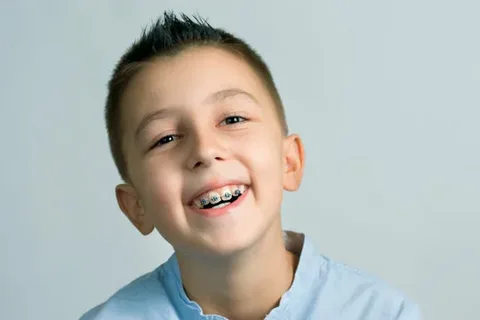
An adult tooth is coming in sideways. Your child avoids biting into apples. Their smile looks uneven, and you are wondering, “Does my child need braces?”
One crooked tooth does not automatically mean braces are needed. Children’s mouths change as baby teeth fall out and larger adult teeth appear. The key is to notice whether a change continues or affects eating, cleaning, speech, or comfort.
Small gaps and slightly crooked new teeth can be normal while a child grows. Adult teeth are larger than baby teeth, so the smile may temporarily look crowded.
Concern increases when several teeth are affected, the problem does not improve, or everyday activities become difficult. Look beyond appearance: can your child brush easily, chew comfortably, and close the teeth without shifting the jaw?
Regular pediatric cleanings and exams allow these changes to be compared over time.
Crowding may look like a sideways tooth, an adult tooth growing behind another tooth, or several teeth competing for limited space. Tight overlaps can also make brushing and flossing harder.
One uneven tooth may improve, but several crowded adult teeth deserve a check.
Small spaces can be normal while adult teeth are arriving. Larger gaps deserve attention when they remain or regularly trap food.
Watch whether the space is slowly closing or staying unchanged as more adult teeth come in.
Ask your child to bite down gently. The upper teeth should fit comfortably around the lower teeth without the jaw sliding sideways.
Arrange a check if the upper front teeth stick out far, the lower teeth sit in front, the front teeth remain apart, or one side closes first. Straight-looking front teeth can still hide a problem farther back.
Notice whether your child chews only on one side, avoids firm foods, takes very small bites, or struggles to bite through a sandwich.
A repeated pattern of difficulty, discomfort, or food avoidance may mean the teeth are not working together comfortably.
Baby teeth hold places for adult teeth. If one is lost early, nearby teeth may move into its space. If it stays too long, the adult tooth may appear behind it or in another position.
Ask about long delays, an unusual tooth-loss order, or a “double row” of teeth.
Thumb sucking, long-term pacifier use, mouth breathing, or difficulty closing the lips may affect how the front teeth grow. These habits do not prove that braces for children are necessary, and a child should not be blamed.
A dentist can decide whether monitoring or early braces guidance is appropriate.
Watch for a jaw that moves sideways when closing, repeated clicking, tiredness while eating, or frequent cheek biting.
Book a visit sooner when your child has pain, swelling, difficulty opening the mouth, or trouble eating. A painless concern can usually wait for a scheduled visit.
The American Association of Orthodontists recommends a first braces-focused check no later than age seven. Children often have both baby and adult teeth by then, making developing concerns easier to notice.
This does not mean every seven-year-old needs braces. Many children are simply watched and checked again later. Others may benefit from an early step before full braces are considered.
The provider will look at the teeth, ask your child to bite down, and discuss eating, cleaning, speech, or comfort problems.
Pediatric digital X-rays may be suggested when needed to view teeth that have not appeared. Parents should leave knowing whether growth looks normal, needs watching, or requires a treatment discussion.
Mention one mildly crooked tooth at the next routine visit when there is no pain or chewing difficulty.
Schedule a braces check when several adult teeth overlap, the teeth meet unevenly, a mouth habit continues, or a new tooth appears in an unusual place.
Seek care sooner for pain, swelling, trouble chewing, or difficulty opening and closing the mouth. The goal is not to rush into braces, but to stop guessing.
Parents searching “does my child need braces near me?” need more than an online checklist. An in-person visit can show whether the concern is temporary, needs watching, or requires treatment.
A pediatric dentist in Bulverde, TX can review tooth growth and connect your family with suitable braces care. Bring photos and note any eating problems or changes you have noticed.
These signs can guide parents, but they cannot replace a full dental check. Watch for repeated crowding, gaps that remain, uneven biting, chewing trouble, unusual tooth loss, continued mouth habits, or jaw discomfort.
Still unsure if your child needs braces? A simple evaluation can give you the answers you need. You may learn that treatment is needed, that waiting is better, or that everything is developing normally. Each answer gives your family a clearer plan.
Smiles of Bulverde offers child-friendly dental visits, careful growth checks, and clear answers for parents considering braces. Our team looks beyond appearance to understand how your child bites, eats, and cleans each tooth. We explain every option simply, recommend treatment only when appropriate, and help families plan next steps confidently.

A second opinion may help when your child is very young or the reason for starting now is unclear. Ask what waiting could change, what the first stage should fix, and whether braces may still be needed later.
Not always. Many children wait until most adult teeth appear, while others need an earlier step for crowding, unusual tooth growth, or teeth that meet poorly. The right timing depends on the child overall.
No. An early check often leads only to monitoring. Its purpose is to spot developing concerns and choose the right timing, not to place braces automatically. Treatment may not begin for several years.
Yes. Front teeth may look straight while the back teeth meet unevenly, the jaw shifts when closing, or there is limited room for teeth still developing. A complete check looks beyond the visible smile.
Small changes can happen as the mouth grows and more adult teeth arrive. Continued crowding should still be checked so a dentist can compare progress and explain whether watching or planning braces is wiser.

