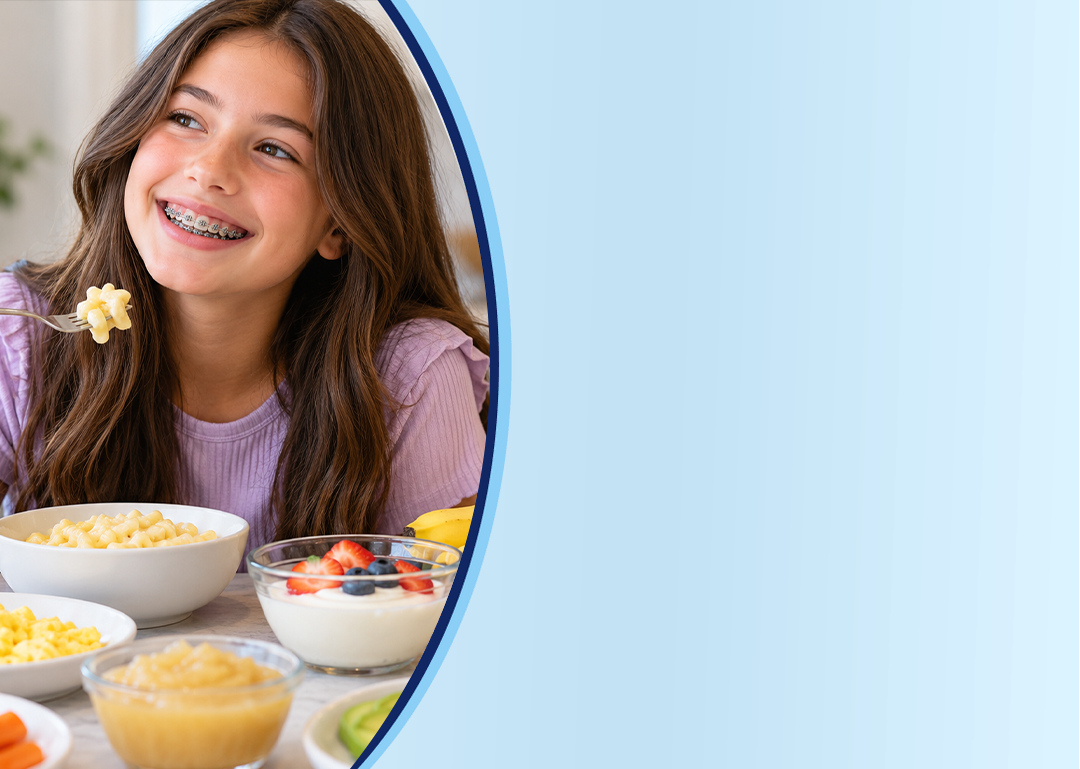
The first week with braces can make familiar foods feel difficult. Start with soft choices such as oatmeal, scrambled eggs, yogurt, soup, pasta, mashed potatoes, and ripe bananas. This guide explains what to eat with braces, what to avoid, and how parents can build meals without leaving their child hungry.
Before treatment, parents may ask about braces cost. Once braces are placed, meal planning becomes an everyday concern.
Teeth may feel tender when your child bites or chews during the first few days. Braces can also feel unfamiliar against the cheeks and lips. Soft food reduces chewing pressure while your child adjusts.
Choose foods that are easy to cut with a fork, do not pull when chewed, and can be eaten in small bites. Dr. Lisa helps parents understand these food changes so children can stay comfortable without missing balanced meals.
Good breakfasts include scrambled eggs, oatmeal, yogurt, soft pancakes, cottage cheese, and ripe bananas. Smoothies also work, but skip hard toppings, seeds, and large frozen fruit pieces. Blend in yogurt, milk, or banana for a more filling drink.
Try soft pasta, macaroni and cheese, creamy soup, mashed potatoes, soft rice, tender fish, cooked vegetables, beans, or finely shredded chicken. Food should be warm rather than very hot if the mouth feels sensitive.
Applesauce, pudding, soft cheese, yogurt, ripe melon, and smooth hummus are easy snacks. Water and milk are practical drinks. The American Association of Orthodontists food guide also recommends rinsing with water after eating to loosen food around braces.
Begin with foods that need almost no chewing.
Breakfast: yogurt with mashed banana or smooth oatmeal.
Lunch: creamy soup with soft bread.
Snack: applesauce, pudding, or a smoothie.
Dinner: mashed potatoes with scrambled eggs, soft fish, or well-cooked vegetables.
Serve smaller portions more often if a full meal feels tiring.
As chewing becomes easier, add foods with more texture.
Breakfast: soft pancakes, eggs, or oatmeal.
Lunch: macaroni and cheese, soft noodles, or rice with beans.
Snack: soft cheese, ripe fruit, or yogurt.
Dinner: shredded chicken with soft rice, pasta with smooth sauce, or a mild bean burrito cut into small pieces.
Your child may be ready for soft sandwiches, tender meat, soft tacos, and cooked vegetables. Cut everything into bite-sized pieces and avoid biting with the front teeth.
Children adjust differently. Move forward by comfort, not a deadline. Parents exploring braces for children and teens can ask for food instructions that match their child’s braces.
Avoid popcorn, nuts, hard candy, ice, thick chips, pretzels, and hard pizza crust. These foods can place too much pressure on a bracket or wire.
Gum, caramel, taffy, gummy candy, and chewy bagels can pull on braces or become difficult to remove.
Whole apples, raw carrots, corn on the cob, and thick sandwiches should not be bitten with the front teeth. Slice, cook, or remove the food from the cob before serving it.
Choose soft pizza crust, a soft burger bun, and tender fillings. Remove crunchy toppings, then cut the meal into small pieces. A burger that is difficult to bite can be eaten with a fork.
Thinly slice apples, steam carrots until soft, and cut corn from the cob. This keeps these foods on the family menu without placing extra pressure on braces.
Choose shredded chicken, ground meat, tender fish, soft tacos, pasta, rice, or mashed sides. Skip tough steak, hard taco shells, and heavily fried coatings. Dr. Lisa can guide parents when a favorite family meal needs a safer first-week adjustment.
Pack pasta in a thermos, an egg or tuna sandwich cut into small pieces, yogurt, applesauce, soft cheese, or ripe banana. Add water and a small cleaning kit with a toothbrush.
When brushing is not possible, rinsing with water can help remove loose food. Families using dental cleanings and exams can also ask for age-appropriate cleaning tips.
Eating usually becomes easier as first-week tenderness fades. Add firmer foods slowly, but continue avoiding hard, sticky, and very chewy items throughout braces care. Reuse the soft-food plan after future adjustment visits.
Contact the office if discomfort worsens, eating remains very difficult, or a bracket or wire becomes loose. The orthodontic emergency care explains when prompt help may be needed.
Plan several soft meals before the braces appointment, keep quick snacks ready, and cut food before serving it. Parents searching for what to eat with braces in Bulverde, TX, or an orthodontist in San Antonio should ask for personal guidance when their child has trouble eating.
Good family orthodontic care also means knowing how to protect braces at home, respond to problems, and help children eat confidently.
Smiles of Bulverde gives families practical support before and after braces placement. Dr. Lisa helps parents understand everyday food choices, while the team provides braces guidance for children, teens, and adults. Families searching “what to eat with braces near me” can receive clear answers, care, and help when problems arise.

Stop hard, sticky, or chewy foods and contact the braces provider for instructions. Do not pull the bracket or keep testing it with the tongue. Choose soft meals until it is checked, especially if a wire is poking or causing pain.
Pack a soft meal that stays moist, such as pasta, macaroni and cheese, soup in a thermos, or a small egg sandwich. Add yogurt, applesauce, ripe fruit, water, and a toothbrush or rinse plan for after lunch.
Many children begin adding more foods as first-week tenderness improves, but there is no single day that fits everyone. Add texture gradually, keep bites small, and continue avoiding foods that can bend wires or loosen brackets.
A soft burger, tender fries, pasta, rice, mashed potatoes, or a soft taco may be manageable. Cut burgers into small pieces, skip hard buns and crunchy coatings, and avoid sticky sauces that are difficult to clean from braces.
Yes. Choose pizza with a soft crust, avoid hard edges and crunchy toppings, and cut each slice into small pieces. Your child should chew slowly with the back teeth instead of pulling or biting the slice with the front teeth.

